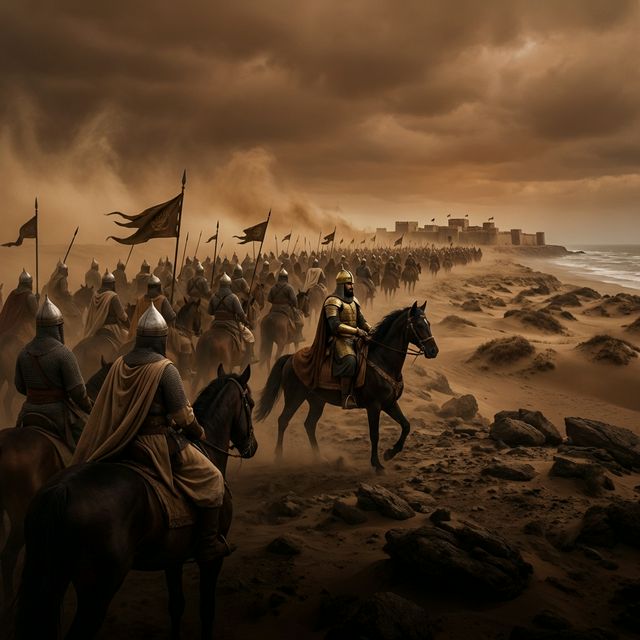
A wide dramatic historical scene of an 8th-century Umayyad army led by Muhammad bin Qasim invading the coastal region of Sindh, India. cavalry, desert dust, traditional armor, a looming threat

Muhammad bin Qasim The Invader Who Ravaged Sindh

What your textbooks never taught you. A comprehensive, source-backed chronicle of the invasion, religious persecution, mass enslavement, and cultural annihilation inflicted by the Umayyad general Muhammad bin Qasim (711–715 CE) β€” and how India still bears its scars today.

Scroll to explore
πŸ“Š The Scale of Destruction

The Numbers They Don't Teach

Documented by early Arab historians, the Chachnama, and primary chronicles β€” the staggering scale of Muhammad bin Qasim's systematic subjugation of Sindh.

βš”οΈ
700
Year of Invasion (CE)
The fall of Debal and the beginning of the conquest
πŸ›οΈ
0
Age of Qasim
A young commander executing a brutal imperial policy
⛓️
0
Estimated Enslaved
Mass enslavement of men, women, and children
πŸ—ΊοΈ
0
Major Cities Subjugated
Debal, Nerun, Sehwan, Brahmanabad, Aror, Multan
🧭 Your Journey Through History

What This Encyclopedia Covers

Navigate through each chapter to uncover the layers of truth that have been systematically hidden, whitewashed, or overlooked in mainstream education.

πŸ“–
The sanitized textbook narrative vs. documented reality
Chapter 1

The Official Narrative

How Indian and Pakistani textbooks have portrayed Qasim as a "harbinger of peace" while systematically omitting his documented brutal conquests. See the truth they hide.

Uncover the truth β†’
πŸ“…
The invasion campaign, year by year
Chapter 2

Timeline of Invasion

An interactive, chronological walk through the Umayyad campaign in Sindh β€” from the first assault on Debal to the march on Multan (711-715 CE).

Walk through time β†’
βš”οΈ
Debal, Brahmanabad, Aror β€” violent sieges
Chapter 3

The Campaigns Documented

Detailed accounts of specific conquests β€” the slaughter at Debal, the fall of Raja Dahir, and the relentless march through Sindh and Punjab.

See the evidence β†’
⛓️
Systematic religious oppression of Hindus and Buddhists
Chapter 4

Religious Persecution

Mass enslavements. The imposition of Jizya. Execution of resisting defenders. The systematic policies implemented to subjugate the native population.

Read the accounts β†’
🎭
Centuries of native heritage β€” erased
Chapter 5

Cultural Destruction

The impact on the native Hindu and Buddhist demographic structure, the destruction of local religious sites, and the permanent alteration of Sindh's cultural fabric.

Understand the loss β†’
πŸ“Š
Data visualization of the scale of conquest
Chapter 6

The Damage Quantified

Data that puts the scale of subjugation into perspective β€” wealth extracted to Damascus, populations displaced or enslaved, territories annexed.

See the numbers β†’
πŸ”—
How the past connects to India's present struggles
Chapter 7

Legacy & Modern Impact

How the foundation laid by Qasim echoes today β€” the root of demographic shifts, the glorification of an invader, and the ongoing civilizational fracture.

Connect past to present β†’
πŸ“š
Complete bibliography of primary and secondary sources
Chapter 8

Sources & References

Every claim on this site is backed by historical sources β€” the Chachnama, Al-Baladhuri's works, and academic research. Explore the bibliography.

Verify the sources β†’
ℹ️
Our mission, methodology, and commitment to truth
About

About This Project

Why this website exists, our methodology for historical research, our commitment to accuracy, and how you can contribute to this educational initiative.

Learn more β†’
He then ordered that all those capable of bearing arms should be put to the sword, and the women and children taken captive. The massacre continued for three days. All the wealth and treasures of the city were confiscated... The slaves and the booty were sent to Hajjaj. β€” The Chachnama, describing the aftermath of Muhammad bin Qasim's conquest of Debal
Wikipedia: Muhammad bin Qasim
⚠️ Why This Matters Today

The invasion by Muhammad bin Qasim in 711 CE was not merely a military conquest; it marked the beginning of a prolonged civilizational clash in the Indian subcontinent. The aggressive assertion of political and religious dominance over native populations established precedents for future invasions. Understanding the reality of this inaugural conflict, rather than its whitewashed version, is crucial for grasping the historical trajectory that shaped the subcontinent's complex and often fractured modern identity.

πŸ” Textbook vs. Reality

The Two Faces of Muhammad bin Qasim

One version is politically sanitized for textbooks. The other is chronicled in early Islamic texts, particularly the Chachnama, detailing the brutal realities of the conquest.

πŸ“—
What Textbooks Say
  • "A just and tolerant administrator"
  • "Brought the light of civilization to Sindh"
  • "Rescued widows and orphans from pirates"
  • "Granted freedom of religion to all natives"
  • "His invasion was purely a retaliatory justice mission"
  • "A hero who established peace and equity"
πŸ“•
What History Documents
  • Ordered the massacre of all males aged 17 and above upon conquering Debal
  • Enslaved tens of thousands of women and children to be sent as the 'khums' (one-fifth share) to the Caliphate
  • Employed mass executions to crush native resistance
  • Imposed strict Jizya (poll tax) to subjugate non-Muslims financially
  • Systematically dismantled the native political structure of Sindh under Raja Dahir
  • His campaigns were driven by imperial expansionism and religious zeal, not just piracy retaliation
  • The documented reality in the Chachnama contradicts the modern "tolerant" narrative
πŸ•―οΈ Education is the First Step

History Forgotten is History Repeated

This website exists because every Indian has the right to know their true history. Every claim is backed by historical texts and chronicles. Every fact is verifiable. Begin your journey through the chapters that textbooks left out.