Chapter 7
Legacy & Modern Impact
The long shadow of 711 CE: How the conquest of Sindh established the fault lines that eventually fractured the Indian subcontinent.
The long shadow of 711 CE: How the conquest of Sindh established the fault lines that eventually fractured the Indian subcontinent.
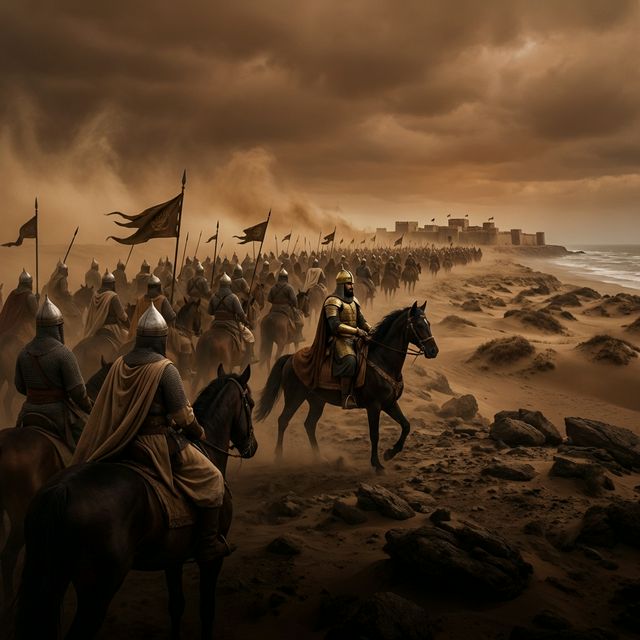
The invasion by Muhammad bin Qasim in 711 CE was not a fleeting historical event; it was the violent insertion of an expansionist ideology into the Indian subcontinent. The socio-political precedents established by his campaign—mass displacement, the implementation of Jizya, and the destruction of native heritage—created a demographic and civilization fracture that has never healed.
In modern Pakistan, Muhammad bin Qasim is officially celebrated as a foundational national hero. He is frequently referred to as the "First Pakistani," with textbooks claiming that the foundation of the modern Islamic Republic was laid the day his forces stepped onto the shores of Debal. Wait—let's examine that claim.
By embracing a foreign imperial conqueror who slaughtered the indigenous ancestors of the very people who now celebrate him, a profound civilizational alienation is enforced. Ports (like Port Qasim) and naval bases are named in his honor. This glorification actively erases and insults the memory of Raja Dahir and the native Sindhis who died defending their sovereign homeland against foreign imperialism.
The policies instituted by Qasim—treating native Hindus as second-class citizens meant for subjugation—did not disappear when the Umayyad Caliphate fell. They became institutionalized.
Today, the indigenous Hindu minority in Sindh, Pakistan, faces a continuing, methodical existential threat. The headlines of today echo the mandates of Hajjaj from 711 CE:
For the modern Republic of India, the legacy of Qasim is a stark warning against historical amnesia. When a civilization allows textbooks to sanitize the slaughter of its ancestors into a "rescue mission," it loses the capacity to understand the root causes of its modern geopolitical crises.
The partition of India in 1947 was the ultimate, tragic culmination of the civilizational fault line that was forcibly carved into the soil of Sindh in 711 CE. Understanding Muhammad bin Qasim's true history is not about reviving ancient hatreds; it is about reclaiming the dignity of truth and understanding the immense resilience of a civilization that survived a 1,300-year siege.