Chapter 5
Cultural Destruction
The systematic erasure of ancient Buddhist and Hindu heritage, dismantling the spiritual landscape of Sindh.
The systematic erasure of ancient Buddhist and Hindu heritage, dismantling the spiritual landscape of Sindh.
Before 711 CE, the Sindh region was a vibrant crossroads of ancient Hindu and Buddhist cultures. It was a land of magnificent stupas, revered Sun worship centers, and deep philosophical traditions stretching back millennia to the Indus Valley Civilization.
Muhammad bin Qasim's invasion initiated a deliberate process of cultural erasure, replacing the indigenous framework with an imported foreign imperial structure.
Sindh was home to a massive Buddhist population, particularly under the previous Rai Dynasty. Many Buddhist monks (Samanis) and governors, harboring pacifist beliefs or political grievances against the Brahmin Raja Dahir, initially chose not to resist Qasim's forces, hoping for clemency.
Their pacifism was met with subjugation. The imposition of the Jizya tax fundamentally destroyed the Buddhist monastic system, which relied on alms and royal patronage. Unable to support themselves under the extortionate tax, and watching their monasteries desecrated, Buddhism was effectively starved out of existence in Sindh over the following centuries.
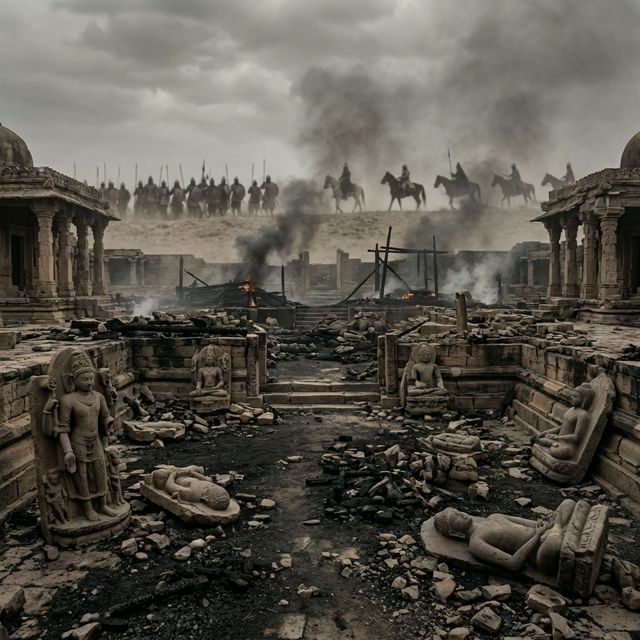
Hindu religious centers were explicitly targeted for both their immense wealth and their ideological significance.
The destruction of the massive temple at the port of Debal inaugurated the campaign. But the most horrific cultural crime occurred at the grand Sun Temple of Multan. Qasim plundered the temple’s vast treasuries, severely damaging the local religious economy. To permanently humiliate the devotees, a dead cow's flesh was tied around the neck of the golden idol—a calculated act of ritual impurity designed to break the civilizational spirit of the native Hindus.
The cultural destruction went beyond physical temples. The Umayyad administration initiated the gradual replacement of the native Sindhi and Sanskrit linguistic traditions. Arabic was installed as the language of the elite, the administration, and the ruling class.
Native intellectuals, artisans, and artists who were not enslaved and deported found themselves stripped of state patronage. The ancient university centers and academies of learning were sidelined in favor of imported theological constructs. By severing the populace from their ancestral languages, texts, and educational systems, Qasim laid the groundwork for the permanent alienation of the Sindhi people from their pre-Islamic roots.